Peruvian designer Genaro Rivas’ latest collection distinguishes rebirth from restoration


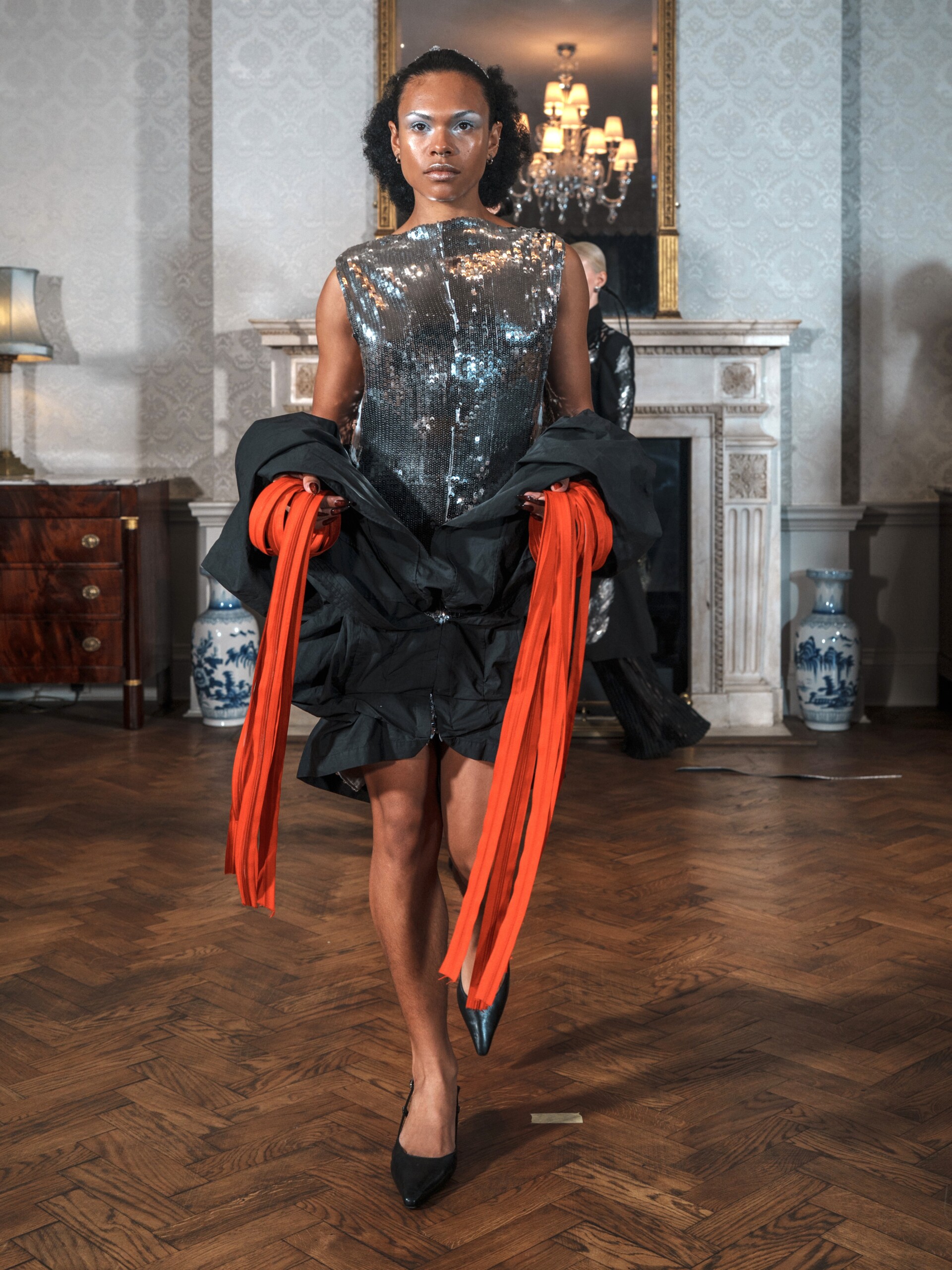
A Shard Reborn explores how deconstruction changes design and purpose, examining what remains as something to celebrate, not conceal.

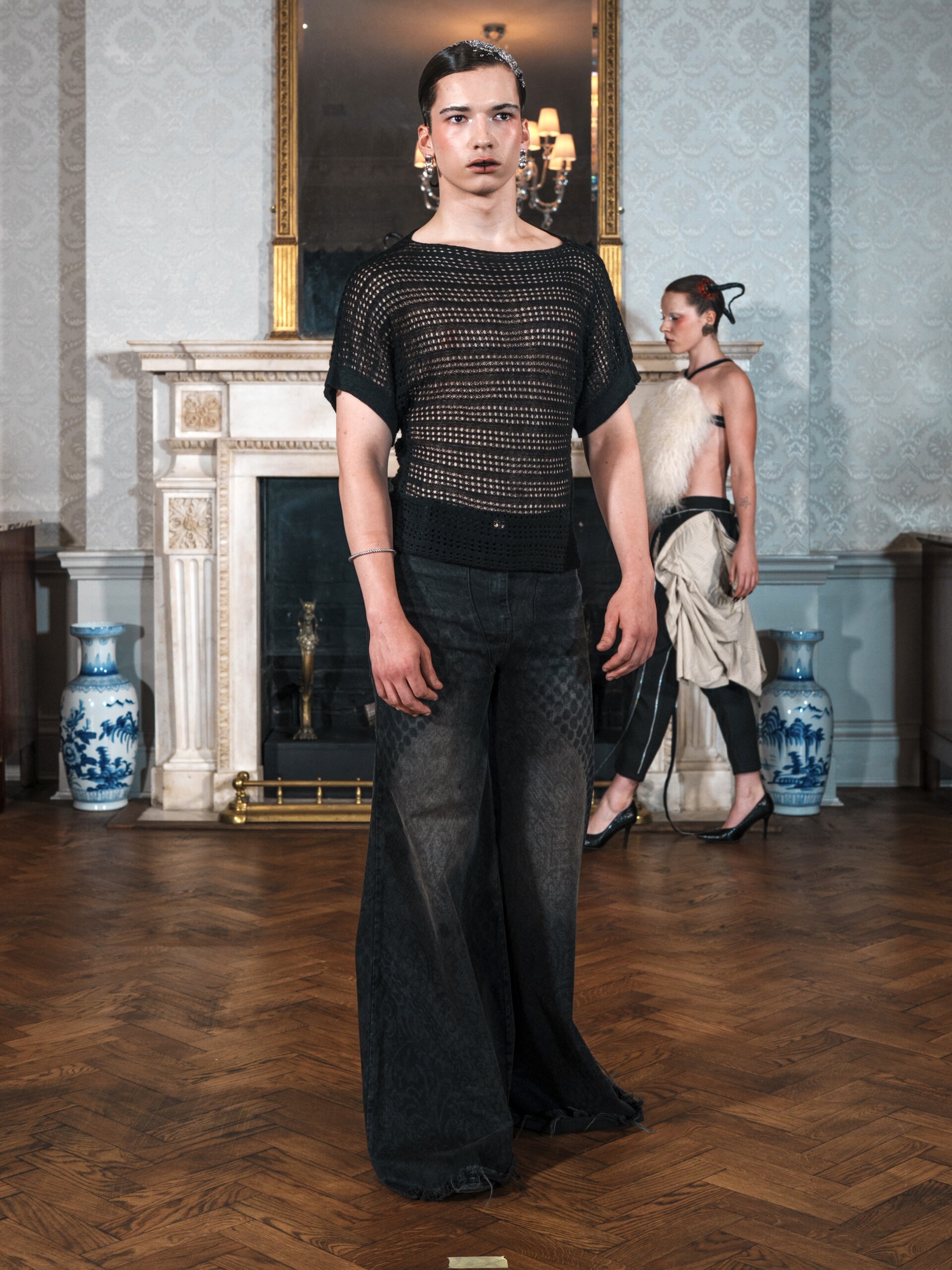
Pre-owned clothes, including pieces sourced through eBay, undergo dismantling and reworking, with Olga Mieloszyk contributing to their transformation, while accessories selected by Dayli Jewels were sourced from pawn shops and auctions across the UK and Sweden.

Rivas works with objects that already exist, reinventing their particular characteristics as part of the design and styling process. Modification is considered at several stages, from the initial selection of a reclaimed item to its embellishment. The emphasis is on what each intervention changes, rather than on achieving a uniform finish.

Hand embroidery by Marcy Wan and painting applied directly to garments by Janisse Jaase also introduce distinct approaches to surface decoration. An ordinary fastening retains its identity while assuming a substantially different role in how a piece is constructed. Increasingly recognisable within his practice, functional components become structural possibilities – a crucial element of the collection’s innovation.

A Shard Reborn is not about restoring something to what it was before. It is about allowing transformation to leave a mark — and finding possibility within what remains

Dubbed “neo-gothic futurism”, leather, delicate tulle and crystals appear alongside acrylic, plexiglass and metal, combining historical references with industrial substances and unconventional assembly. Rivas’ transformations question how clothing accommodates the body when the chosen components differ so markedly in weight, flexibility and rigidity.

Ashlyn Rowland’s styling coordinates the clothes with sculptural hair by Michael Knight, whose crystal applications make adornment integral to the beauty direction. This attention to shape across the presentation reinforces its couture sensibility: intricate handwork extends beyond the garments themselves.

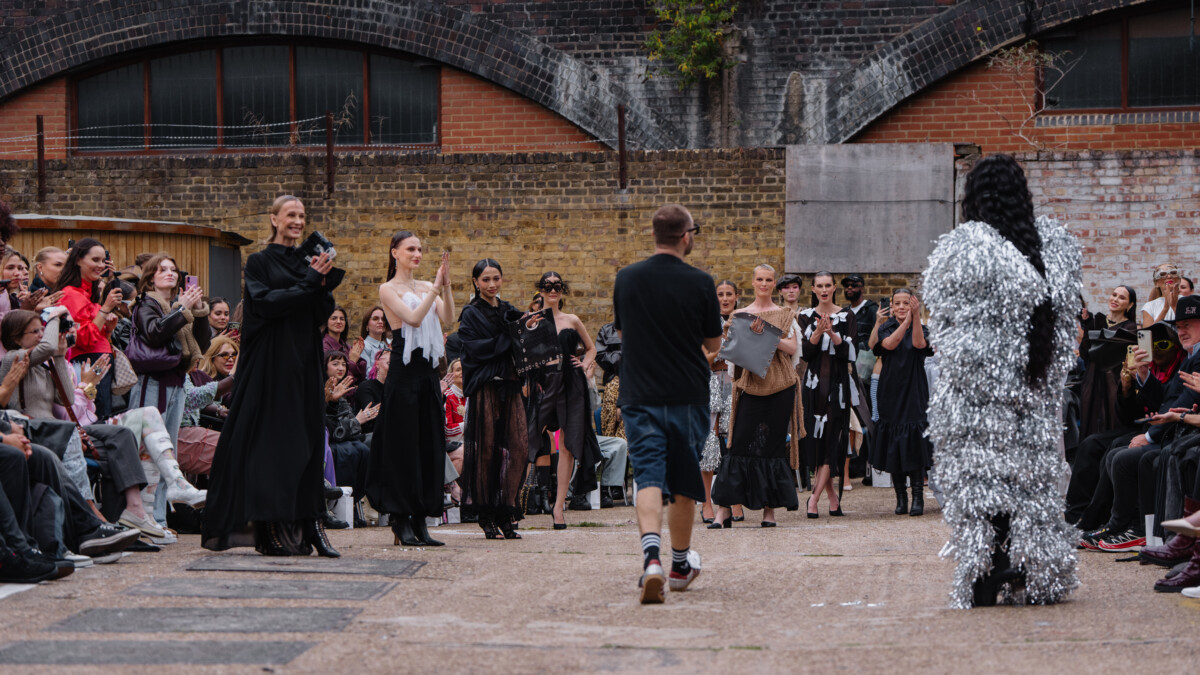
The closing aluminium dress makes the demands of construction particularly clear. Its rigid sections require individual cutting, shaping and assembly to produce a wearable form capable of movement. Maya Heritage works intensively on the piece, with technical and creative input from Phil Welch of East London’s Phil Creates Studio and collaborators in Peru cutting and preparing the metal. The process depends on resolving the relationship between an inflexible substance and a moving wearer.

This finale broadens the meaning of the title beyond remaking second-hand clothes – materials acquire different uses without needing to resemble conventional fabric. Rivas’s interpretation of rebirth is most convincing in that distinction: a fundamental change in form and function, and a reimagining of convention and construction.

You may also like

More in:Look

Comments are closed.