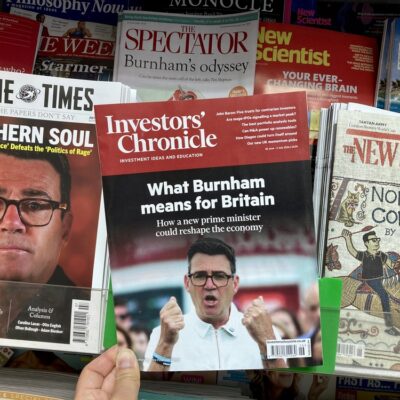
As Healey offers households £100, press splits on whether the bill should be bigger — or who should foot it

Chancellor John Healey delivered his first Autumn Budget on Wednesday, presenting a package he described as offering breathing space to households squeezed by rising energy costs and a global economy destabilised by the US-led conflict with Iran.
The core measure was a rise in the bank corporation tax surcharge from 3% to 6%, time-limited to fifteen months and expected to generate around £1.5bn.
Healey framed it directly as a transfer from the financial sector to ordinary households, saying he was looking to the banks to help fund relief for British families at a moment of external economic pressure.
The money will part-fund a one-off £100 energy payment to around 20 million households in council tax bands A to D, paid directly into eligible accounts this winter.
Healey also announced the abolition of gas standing charges, which he described as unfair and outdated, and set out a new cost-control framework aimed at reducing energy bills on a longer-term basis.
On business, the threshold for small business rates relief in retail, hospitality and leisure was raised from £12,000 to £18,000, taking an additional 70,000 businesses out of rates altogether, with the chancellor noting that roughly half of all shops, restaurants and gyms in England would now pay nothing. Adult gaming centres and vape shops were explicitly excluded.
Business rates will be devolved in full to local administrations by 2030, with a fifth of revenue going directly to regional mayors from next year; some income tax revenue will follow. Healey confirmed that the government will set out how it plans to meet NATO’s 3% defence spending target during next year’s spending review, rather than in the budget itself. He also reversed his predecessor’s plan to cut the cash ISA allowance, keeping the limit at £20,000.
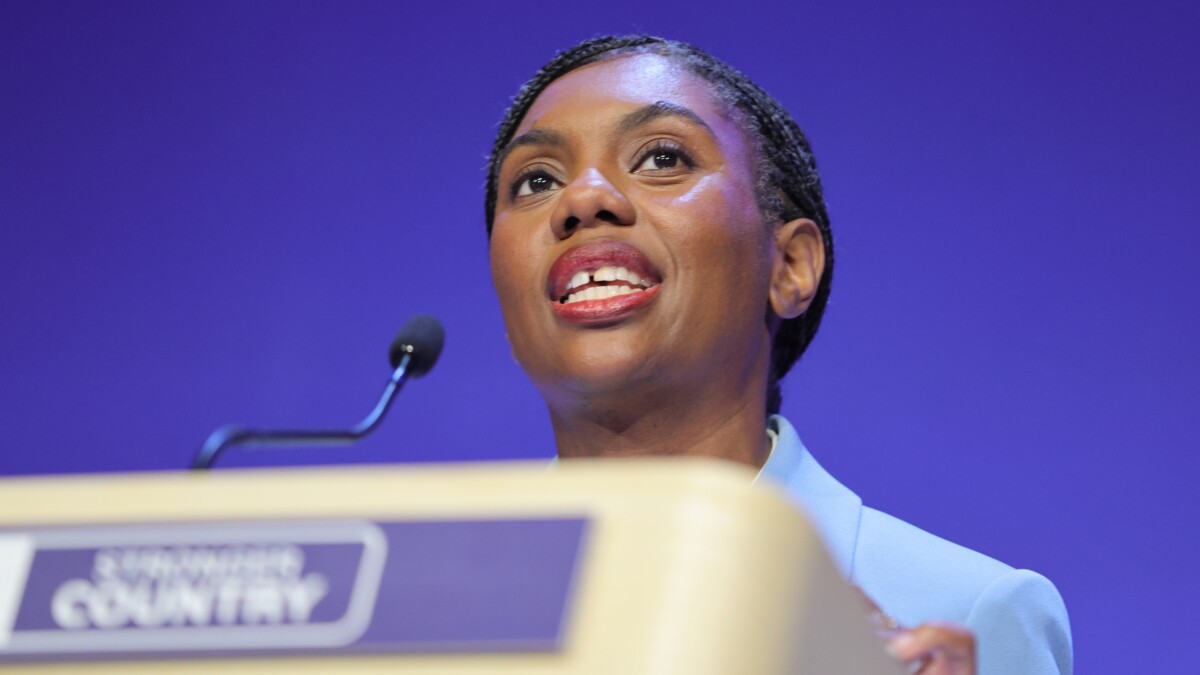
Kemi Badenoch said the measures were not bold enough. Sharon Graham of Unite described the cost-of-living support as baby steps that would not address the scale of the crisis.
Left-leaning coverage broadly welcomed the bank levy as a proportionate response to five years of bank profits generated on the back of high interest rates, and framed the household payment as meaningful if modest. Right-leaning outlets led with the growth risk, characterising the surcharge as a raid on business and echoing Badenoch’s insufficiency critique, while treating the devolution measures with scepticism, presenting them as a redistribution of existing powers rather than a credible plan for generating revenue.
Unless linked, headlines are front pages on 29/10/2026.
Worse off under Burnham: The middle-earners and families struggling with bills who face a fall in living standards under Labour’s ‘is that it?’ Budget
Chancellor announces £100 energy payment for millions
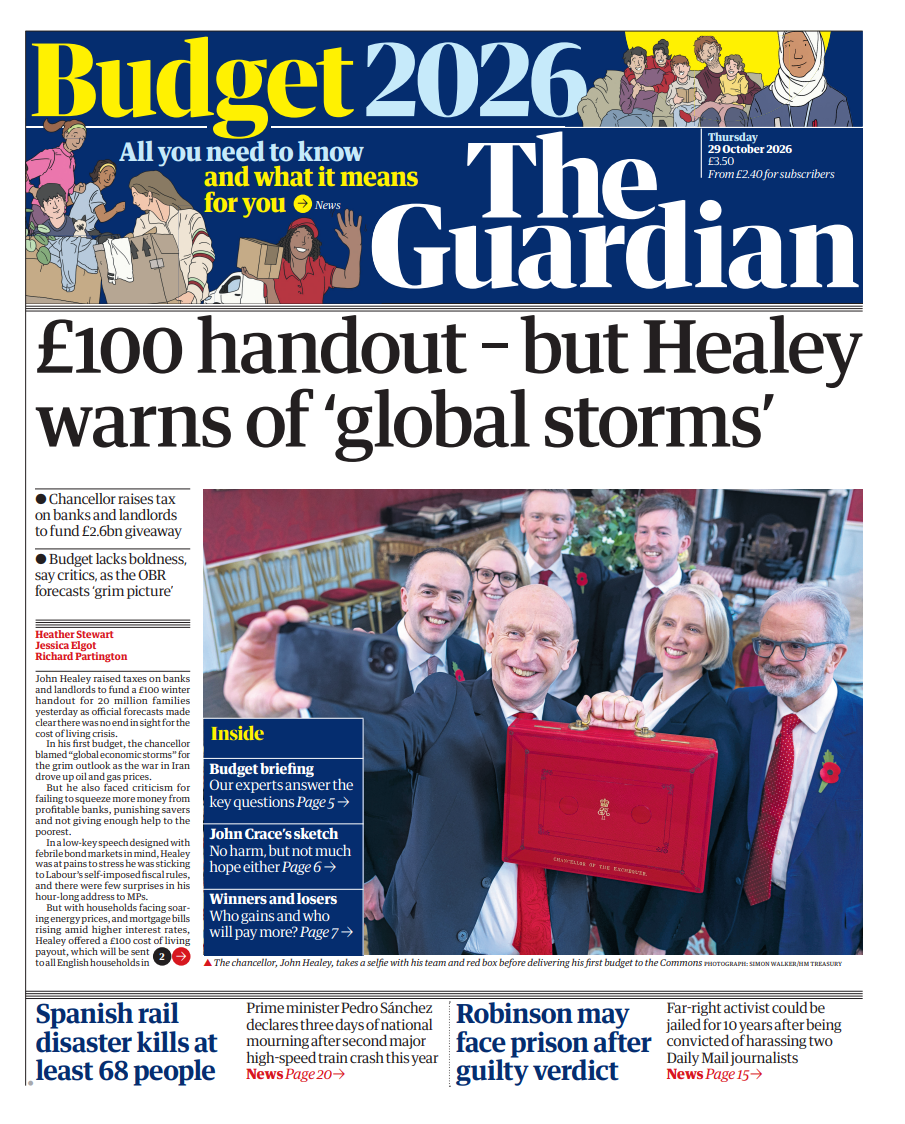
The Guardian
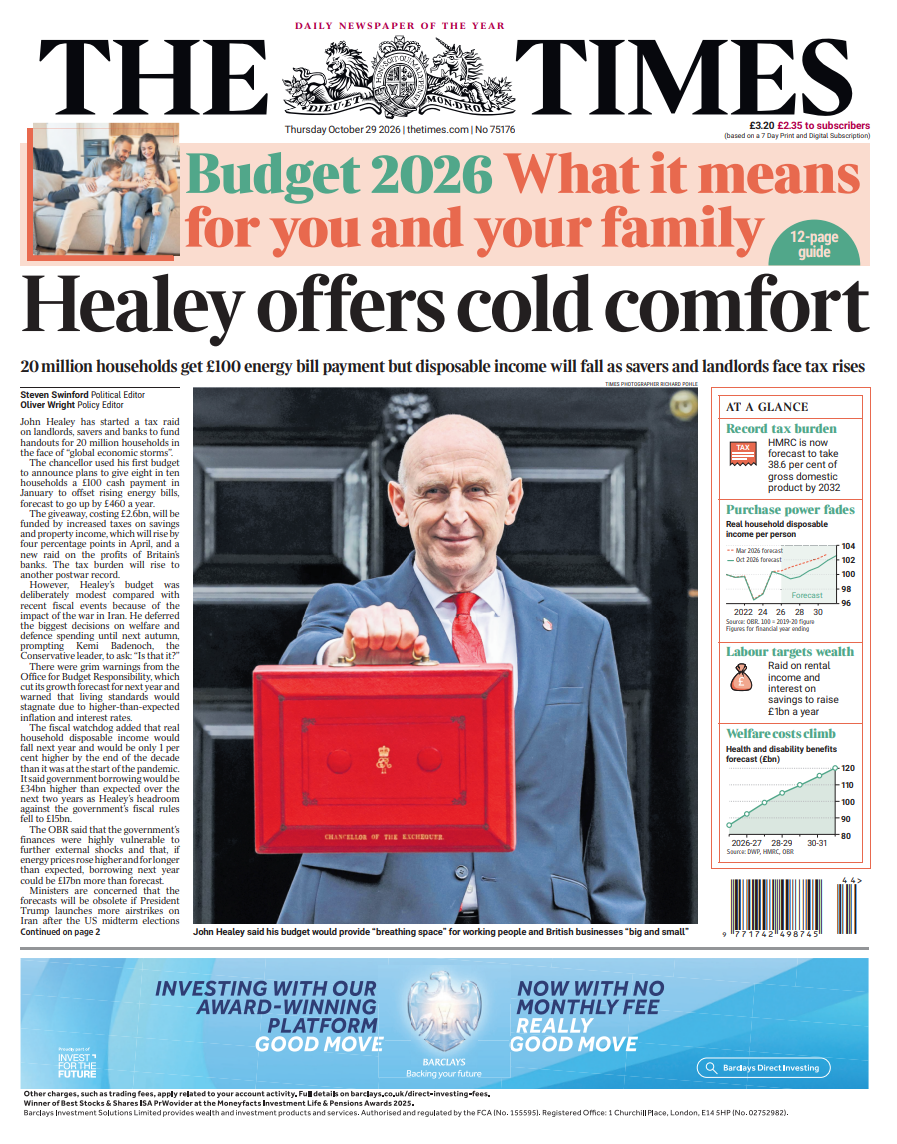
The Times
John Healey’s Budget ripped apart by experts as key household bill to soar for millions
‘Pitiful bungs and massive tax rises’: Our experts’ verdict on the Budget
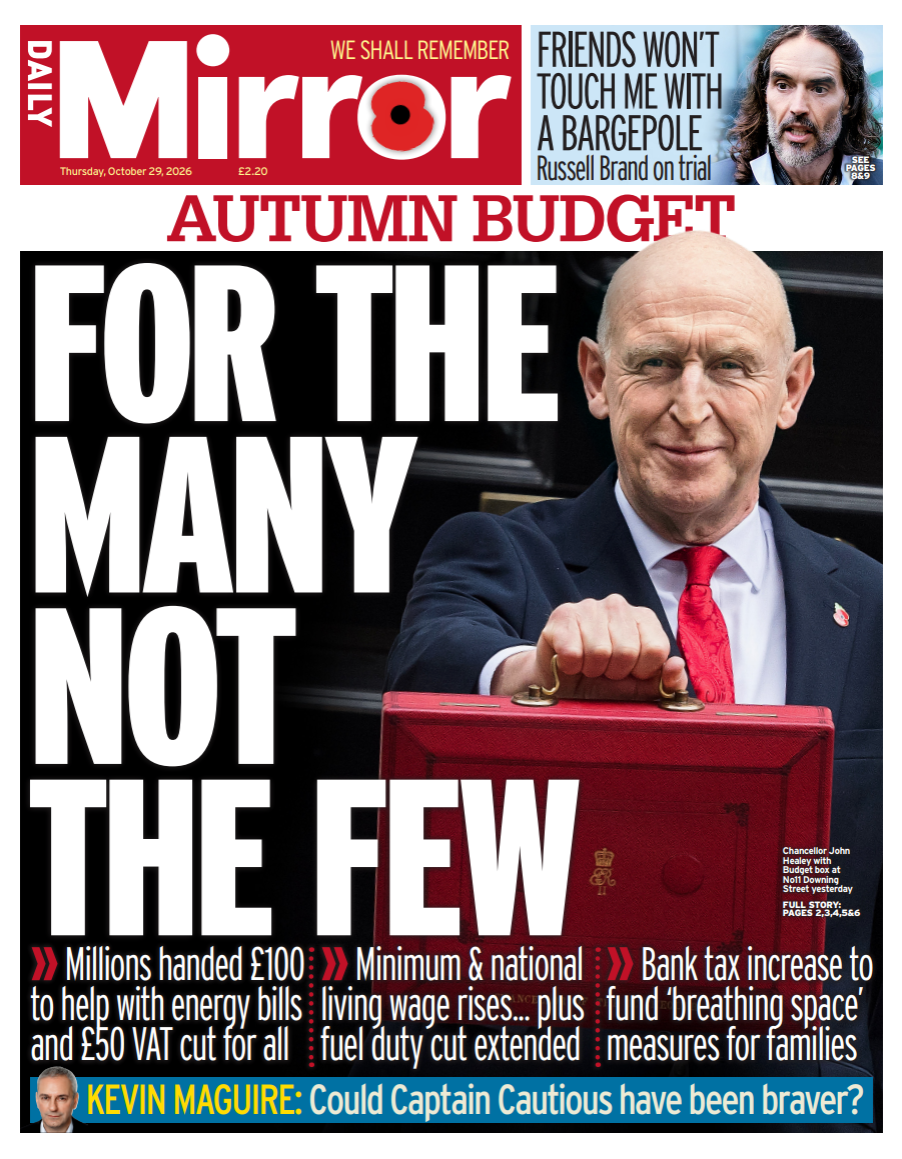
Daily Mirror
Editorial credit: Sean Aidan Calderbank / Shutterstock.com
You may also like