 By
By Review: Laura Misch – Lithic
There’s a version of this album that could have been unbearable: a concept record built around stone and deep time and ancient ancestors, recorded partly in caves, with all the attendant risk of new-age vagueness. That Misch avoids this entirely is down to a simple fact — she’s a brilliant arranger first, and a conceptualist second, and on Lithic the concept never gets to outrun the songs.
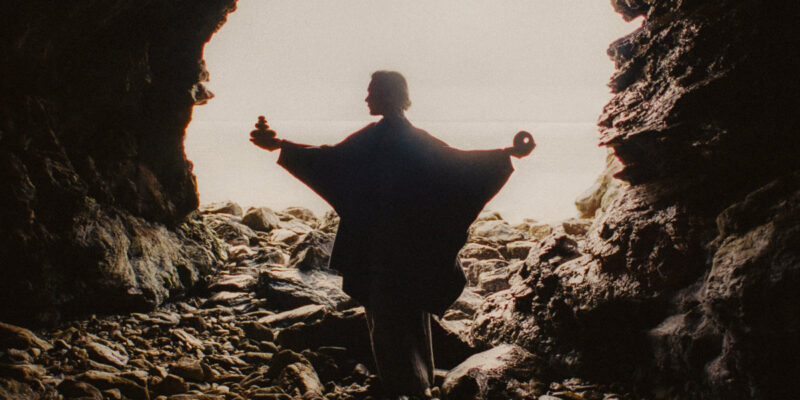
This is her third album, following 2023’s Sample the Sky and its acoustic counterpart Sample the Earth, and the trajectory has been consistently downward, literally. Where the first record floated, untethered, in clouds of harp and vocal harmony, Lithic digs in. Misch describes the geological focus as the obvious next step after covering sky and earth — deeper downwards seemed inevitable. Much of it was recorded outdoors, in quarries and caves around Cornwall, on the Greek island of Hydra, and on the shingle of Dungeness, and you can feel the locations in the recordings even when you can’t identify them — a sense of reverb that belongs to real stone rather than a plugin.
Opener “Breathing” sets the tone with an instrumental wash of strings that feels less like a song than an exhale. “Kairos” and “Echoes” follow with a kind of unhurried, beatless intimacy — saxophone and treated vocals circling each other in a space that feels enormous. The record covers a wide range of insular moods, from the chill of “Scrolls” to the almost beatless drift of “Kairos”. “Siren” introduces something closer to rhythm, built from struck slate and percussion sourced from the landscape itself rather than a kit. “Jealousea,” featuring Alfa Mist, is one of the record’s more song-shaped moments, and benefits from the contrast.
What’s most striking is how unforced the whole thing feels. Misch has spoken about being drawn to artists who work across decades rather than chasing immediate relevance, and Lithic has that quality of patience. It’s her most expansive record yet, in both length and sonic range, and the saxophone and voice no longer sit against an incongruous backdrop the way they did on her earlier, more urban-facing work — here, everything feels of a piece.
If there’s a criticism, it’s that the record asks for a particular kind of attention. This isn’t music for half-listening; its rewards are in the textures, the slow accumulation of detail, the sense of being somewhere very old and very quiet. Give it that attention and Lithic repays it handsomely — a record that sounds like it was excavated rather than written, and feels all the better for it.