EIFF: Sheep in the Box
There is a scene in Antoine de Saint-Exupéry’s The Little Prince in which a pilot, unable to draw a convincing sheep, simply draws a box and tells the boy the sheep is inside. The boy is delighted, because the image asks him to imagine rather than observe. Hirokazu Kore-eda has made an entire film from this idea — a film about grief, technology, and the things we project onto the people we’ve lost. That it doesn’t fully work is almost beside the point, since the fact that it keeps trying matters enormously.
The premise is unmistakably Kore-eda territory. Otone and Kensuke are a couple two years into mourning their seven-year-old son Kakeru, killed in an accident. A company offers them what amounts to a replacement: a humanoid robot built in Kakeru’s image, running on AI.
The film follows what happens when grief is given something physical to attach itself to. In a director’s career that includes Nobody Knows, Shoplifters and Still Walking, the emotional logic feels entirely natural. These are exactly the human fault lines Kore-eda has always been drawn to — the improvised family, the love that persists despite every reason not to, the way ordinary people quietly absorb extraordinary pain.
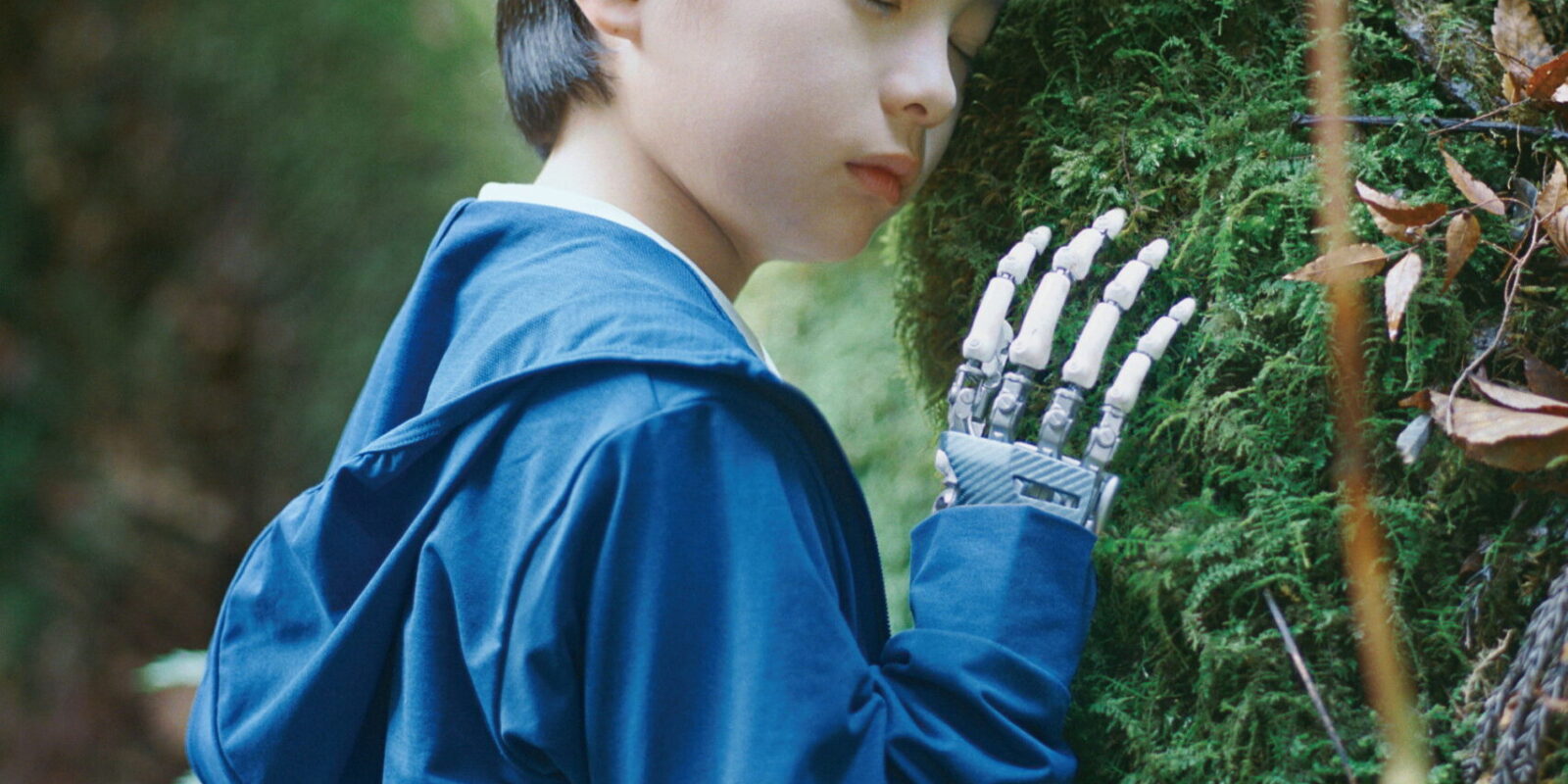
Where the film struggles is in deciding what it wants to say about technology itself. The “can machines feel?” question has become something close to a cliché in contemporary cinema, and Sheep in the Box never quite finds a fresh angle on it. The robot Kakeru is rendered with enormous tenderness by young actor Rimu Kuwaki — there are moments of genuine, disarming warmth — but the film keeps hedging, wanting to present him as both a source of comfort and a warning sign, and not fully committing to either reading. A subplot involving a group of abused and discarded robots living in the woods carries a faint echo of Spielberg’s A.I., a comparison the film doesn’t survive entirely intact.
And yet, the central performances are quietly devastating in the way Kore-eda’s actors so often are, finding the unspoken grief beneath every domestic exchange. The film’s gentler passages — a meal shared at a kitchen table, a child pressing a hand against a tree — carry the kind of aching specificity that no amount of structural uncertainty can entirely undermine. It is also, for all its flaws, asking the right questions at the right moment. In an era when AI companions are already being marketed to the bereaved as genuine comfort, a film that takes the emotional impulse seriously rather than merely satirising it feels valuable, even if it doesn’t land the ending.
Sheep in the Box is not the film it could have been, and will inevitably disappoint those who approach it as the next Shoplifters.
But it is a genuinely curious, humane attempt to sit with one of the more troubling questions of the moment: not whether machines can think, but whether it matters to us if they can — and what that says about the limits of love and loss.