Melancholy has seldom appeared as quietly luminous as it does in Yukinori Makabe’s Sinsin And The Mouse, a reflective drama that hides a gentle romance within its contemplative surface. Over the course of a single day in Taipei, two strangers drift together: a Japanese woman still grieving the recent death of her mother, and a Taiwanese-Japanese man whose sense of belonging has long since frayed. Their chance meeting becomes less a conventional love story than a tentative act of emotional repair.
Premiering at the Glasgow Film Festival, the film draws inspiration from a short story by celebrated Japanese author Banana Yoshimoto. Makabe approaches the material with patience and restraint, shaping a quiet portrait of loneliness within the vast anonymity of city life. Much of the narrative unfolds through wandering conversations, long pauses and thoughtful silences. For viewers unaccustomed to such stillness, the pace may feel demanding. Yet the film’s emotional sincerity and attentive performances reward that patience.
Makabe, who first gained attention with I Am A Monk, again gravitates towards themes of personal loss and spiritual dislocation. Here he frames the story in the intimate 4:3 aspect ratio, a choice that enhances the feeling of closeness between the characters while simultaneously emphasising the isolation of their surroundings. The director allows scenes to unfold without hurry, trusting his actors to carry the emotional weight.
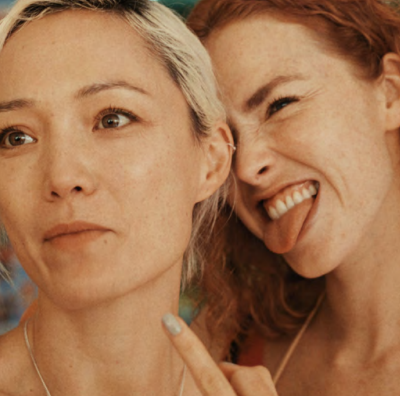
That trust proves well placed. Yukino Kishii plays Chizumi with quiet precision, portraying grief not through grand gestures but through small, telling hesitations. Her counterpart, played by Tseng Jing-hua, brings a gentle awkwardness to Sinsin, a man shaped by a childhood spent in the shadow of an absent celebrity parent. Their chemistry develops gradually as the pair roam Taipei’s streets, sharing fragments of their histories while preparing to attend a friend’s concert later that evening.
Both characters carry different forms of absence. Chizumi struggles with the sudden silence left by her mother’s death, while Sinsin grew up surrounded by emotional distance. As a child he imagined companionship with the mice living in his walls, drawing comfort from stories and fantasy. Their conversations circle these wounds without ever forcing them into neat resolution. Instead, the connection that emerges feels tentative but sincere.
Makabe’s filmmaking thrives on these small observations. Details accumulate quietly: the way Chizumi lingers in places that remind her of childhood memories, or Sinsin’s slightly awkward attempts at humour. The script pays close attention to such moments, allowing the characters’ inner lives to surface naturally through behaviour rather than exposition.
Flashbacks appear throughout the film, yet they are integrated with subtlety. Rather than interrupting the flow, they offer glimpses of emotional context, illuminating the memories that shape each character’s present. Makabe’s editing keeps these transitions fluid, ensuring that past and present feel interconnected rather than disruptive.
At its heart, Sinsin And The Mouse is less concerned with plot than with atmosphere. It observes the quiet rhythms of urban solitude and the unexpected solace that can arise from a fleeting encounter. By the film’s conclusion, the possibility of healing remains modest but genuine. Makabe resists easy sentimentality, choosing instead to suggest that even brief connections can illuminate the darker corners of grief.
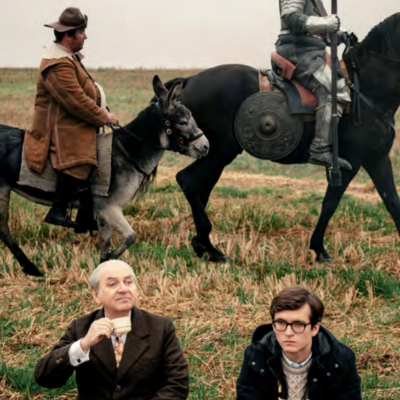
Image: ROBOT COMMUNICATIONS INC & Flash Forward Entertainment