Think

Trump strikes Greenland deal

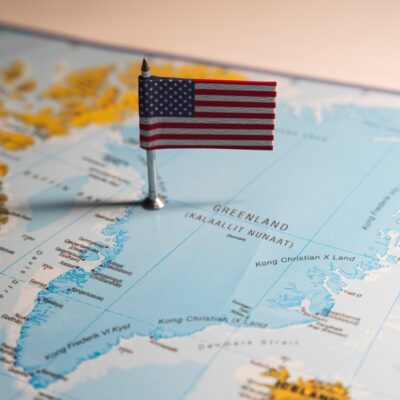
US President Donald Trump has said that a “framework of a future deal” has been formed concerning Greenland, a statement that has surprised allies after weeks of heightened tensions, including earlier remarks in which he did not rule out the use of military force to take control of the territory. Greenland is a semi-autonomous region within the Kingdom of Denmark, which is a member of NATO.

Trump made the announcement following discussions at the World Economic Forum in Davos, Switzerland. Writing on his Truth Social platform, he said the framework followed what he described as a productive meeting with NATO Secretary General Mark Rutte, adding that talks would continue but providing no further details.

Mr Rutte later said that Danish sovereignty over Greenland had not been discussed during the meeting. Denmark’s prime minister, Mette Frederiksen, reiterated that while Denmark was open to negotiations on a wide range of issues, sovereignty was not negotiable. Greenland’s prime minister, Jens-Frederik Nielsen, echoed that position, describing sovereignty as a “red line” and saying he was not aware of the substance of the discussions referred to by the US president.

According to reporting by the New York Times citing anonymous officials, one option that has been considered would involve Denmark allowing the United States to establish military bases in limited areas of Greenland, while retaining overall sovereignty. The newspaper compared the idea to the status of UK sovereign base areas in Cyprus, which have existed since Cypriot independence in 1960. It remains unclear how such an arrangement could proceed given the stated opposition of both Denmark and Greenland to any transfer of sovereignty.

Trump has previously argued that US control of Greenland is necessary to counter potential threats from Chinese and Russian vessels operating in the Arctic, although Danish authorities have said there is currently no such threat. NATO allies have sought to reassure Washington by signalling increased cooperation on Arctic security. Mr Rutte has said any future agreement would involve greater allied contributions in the region and expressed hope that progress could be made by early 2026.

The UK Foreign Secretary, Yvette Cooper, has said Britain supports the creation of an Arctic monitoring mission, similar to NATO’s Baltic Sentry operation, which aims to increase maritime surveillance in the Baltic Sea.

Under a defence agreement signed in 1951, the United States already has broad rights to deploy forces in Greenland and maintains a permanent military presence at Pituffik Space Base in the north-west of the island. US officials have indicated that current discussions may focus on revising or expanding this agreement.

Despite this, Trump has repeatedly stated that he wants the United States to “own” Greenland. Such a move would face legal and constitutional obstacles, including Greenlandic laws that prohibit the sale of land. One potential model sometimes cited by analysts is the US naval base at Guantánamo Bay in Cuba, which has been under US control since 1903 through a long-term lease, though there has been no indication that Denmark or Greenland would accept a comparable arrangement.

Trump’s announcement followed his decision in Davos to step back from earlier suggestions of using military force, a shift that was welcomed by NATO allies. NATO’s founding principle is that an attack on one member is considered an attack on all, and Danish officials had warned that any military action by one ally against another would fundamentally undermine the alliance.

The timing of the announcement, coming after Trump’s meeting with Mr Rutte, has raised concerns in Greenland that discussions about its future are taking place without its direct involvement. Greenland’s foreign minister, Vivian Motzfeldt, said she had not been authorised to negotiate on behalf of the territory, but to communicate Greenland’s non-negotiable positions directly to the US president. Mr Rutte has not confirmed whether this took place and has faced criticism for his consistently favourable public comments about Trump.

You may also like

More in:Think

Comments are closed.

0 %