Samurai exhibition uncovers the reality behind a millennium of myth
A major new exhibition is set to challenge popular ideas about one of history’s most iconic warrior classes, revealing the complex reality behind the myth of the samurai.
Opening at the British Museum, Samurai traces the evolution of the legendary Japanese warriors across nearly a thousand years, from their origins on medieval battlefields to their enduring presence in global popular culture. While samurai are often imagined as fearless swordsmen bound by an ancient code of honour, the exhibition argues that much of this image is a modern invention.
The samurai emerged as a distinct warrior class, known in Japan as bushi, from the 1100s, gradually rising to political dominance. Initially defined by their military role, their identity changed dramatically during a long period of peace that began in 1615. With fewer wars to fight, samurai moved away from the battlefield and became an elite social class that included women. Samurai men formed the backbone of government, serving as ministers and bureaucrats, while many also became scholars, poets, painters and patrons of the arts. Intellectual refinement was considered just as important as martial skill.
By the late 19th century, the hereditary status of the samurai had been abolished altogether. In its place emerged the idea of bushido, or ‘the way of the warrior’, a supposedly ancient moral code that promoted loyalty, patriotism and self-sacrifice. This concept was shaped and amplified during Japan’s period of colonial expansion and military aggression, and later spread internationally as Japan’s culture increasingly interacted with the wider world. Over the 20th century, idealised images of the samurai became firmly embedded in global imagination, often eclipsing historical reality.
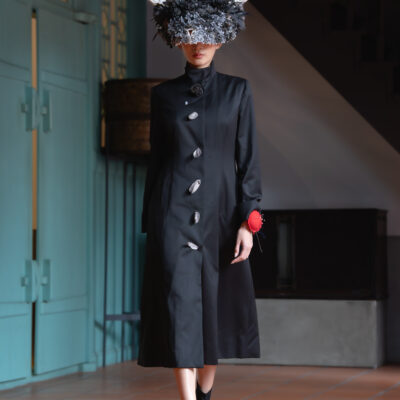
The exhibition explores this evolution through a wide range of objects, from battlefield armour to luxury and ceremonial items. Highlights include a suit of armour sent by Tokugawa Hidetada to King James VI and I, as well as objects linked to refined pastimes such as incense connoisseurship games. Alongside historical artefacts, the exhibition examines the samurai’s lasting influence on contemporary culture, including fashion, film and videogames. Displays range from a Louis Vuitton outfit inspired by Japanese armour to references to modern titles such as Assassin’s Creed: Shadows.
Rather than focusing solely on combat, Samurai offers a candid portrait of the real men and women who lived within this social class and the many roles they occupied across centuries of change. By placing myth, history and modern reinterpretation side by side, the exhibition invites visitors to reconsider how the image of the samurai was created and why it continues to resonate today.
Samurai runs at the British Museum in London, with tickets now available. The exhibition runs from February 3 to May 4.