Abstraction has often been framed as a heroic, inward-looking project – a retreat from representation into pure form. A new exhibition at the Whitworth challenges that familiar narrative, presenting abstraction instead as a shared, evolving language shaped by migration, cultural exchange and changing ideas of modernity.
Rethinking Abstract Art brings together rarely seen and recently acquired works from the Whitworth’s collection, tracing a line from the early 20th century to the present day. Rather than treating abstraction as a single movement or ideology, the exhibition foregrounds its plurality: a field of practices shaped by colour, geometry, gesture and material, but also by politics, technology and global connection.
A key focus is the postwar period, when abstraction became entangled with optimism about design, industry and social progress. During the 1950s and 1960s, British artist Mary Martin was among those engaging with Constructivist ideas that had emerged in Russia around 1915. Her meticulously ordered works, often made with industrial materials, reflect a belief in structure and rationality that resonated strongly in a society rebuilding itself after war.
At the same time, British art was being transformed by artists arriving from the Caribbean, South America and Asia, bringing new perspectives to modernism. Taiwanese-born Richard Lin is represented through minimalist paintings that fuse Western abstraction with Chinese and Taiwanese traditions, using subtle tonal variations to evoke balance and stillness. This dialogue between cultures continues in contemporary works by Zhang Enli, whose luminous use of colour and light draws on themes from the Chinese zodiac, suggesting cycles of renewal and transformation.
The exhibition also broadens familiar narratives of British abstraction. Peter Lanyon’s work is presented beyond the confines of the St Ives landscape tradition, situating his practice within wider national and international contexts. In contrast, Gillian Ayres’ paintings embrace exuberant colour and physical gesture, pushing against the formal restraint that dominated much mid-century British art.
Importantly, Rethinking Abstract Art looks beyond painting and drawing, highlighting abstraction’s presence in textiles from the Whitworth collection. These works underline how abstract ideas have shaped everyday visual culture as well as fine art.
Together, the exhibition’s artists and designers propose abstraction not as an isolated aesthetic pursuit, but as a means of thinking and connecting across cultures, generations and histories, a reminder that abstraction remains, at heart, a profoundly human enterprise.
The exhibition is open to 15 Feb.
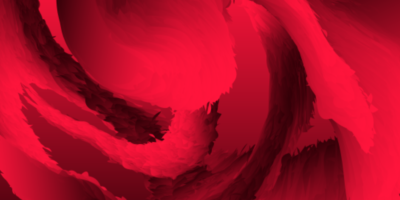
Header credit: Perspex Group on Red E O.2001.1, Mary Adela Martin. © The Whitworth, The University of Manchester.