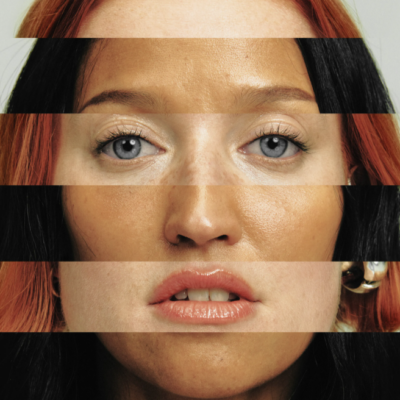
Where Tems’ debut album Born in the Wild traced her artistic beginnings through expansive narratives, Love Is a Kingdom strips things back.
Tems largely works alone, turning the EP into a private record of romantic turbulence. Her idea of love carries a biblical gravity: patient and tender, but demanding endurance even when it causes pain. Though the project runs for barely 20 minutes, it unfolds with ritual-like weight. Each song lingers on a feeling before gently tipping into the next. One moment she is dismissive of a partner who lacks ambition, the next she is kneeling before love itself, repeating her promises as if reciting scripture. Love, she suggests, makes people act against their own logic.
The opening track, First, arrives like a quiet declaration of self-defence. “They keep trying to control me,” she sings, before insisting she will rewrite the narrative. It is not an empty claim. Tems handles most of the writing, production and composition herself, alongside GuiltyBeatz. Sonically, the EP stays close to her progressive R&B and Afrobeats foundations, with subtle deviations. I’m Not Sure, produced with Jonah Christian and Rob Bisel, flirts with Spanish-leaning tones, while Lagos Love carries a warm, almost hymnal glow. Big Daddy shifts again, riding a three-step amapiano-Afrotech pulse.
The emotional pivot arrives with What You Need. Following the devotional Mine, it fractures the fantasy of permanence. The breakup feels uncomfortably intimate, as though the listener has wandered into a moment not meant to be heard. “I’m not what you need,” Tems repeats, her voice tightening under the weight of remorse. When she finally admits “You not mine,” the spell breaks. Closing track Is There a Reason turns its gaze upward, echoing the spiritual questioning of Me & U. Here, Tems speaks directly to God, weighing the value of sacrifice against the cost of suffering.
Faith, once a quiet thread in her music, now frames the entire EP, transforming it from a simple romance into a reflection on perseverance. Still, Tems sometimes retreats too far into abstraction. Her celestial imagery and myth-like language can blur the rawness beneath, keeping the listener at a distance. The poetry is striking, but a few tangible details might have made her kingdom feel more lived-in. Even so, brief and compelling, Love Is a Kingdom confirms Tems as an artist who uses her voice as both comfort and challenge, reimagining what it means to give and receive love without limits.